Brake concerns should be described by what the vehicle does, when it happens, and whether control or stopping performance changed. That information helps establish urgency and prepares the first inspection.
Stop driving when control or stopping ability changes
Do not continue driving simply to reproduce a severe brake symptom. Arrange assistance when the pedal suddenly goes low, braking effort changes sharply, the vehicle pulls hard, a wheel appears loose, fluid is visible near a wheel, smoke or extreme heat is present, or the vehicle does not stop normally. Follow the owner's manual for brake and ABS warnings.
Describe the sound without diagnosing it
Record whether the sound is a squeal, scrape, grind, click, clunk, or rhythmic contact. Note whether it occurs during light braking, hard braking, the first stop of the day, reversing, turning, or driving without the brake applied. A recording made while safely parked nearby may help, but no one should stand near a moving vehicle to capture it.
Map vibration and pedal behavior
- Steering-wheel shake, pedal pulsation, seat or body vibration, or the entire vehicle
- Soft, low, hard, sticking, or slowly sinking pedal
- Pulling left or right and whether it changes with road crown
- Warning lights and messages before, during, or after braking
- Whether the symptom changes with speed, heat, rain, or repeated stops
Collect useful service history
Bring the last brake invoice if available. Record when pads, rotors, calipers, hoses, fluid, tires, wheel bearings, or suspension parts were last serviced. Note recent tire rotation, wheel removal, collision, curb strike, flood exposure, or long storage.
Confirm that the location supports mobile work
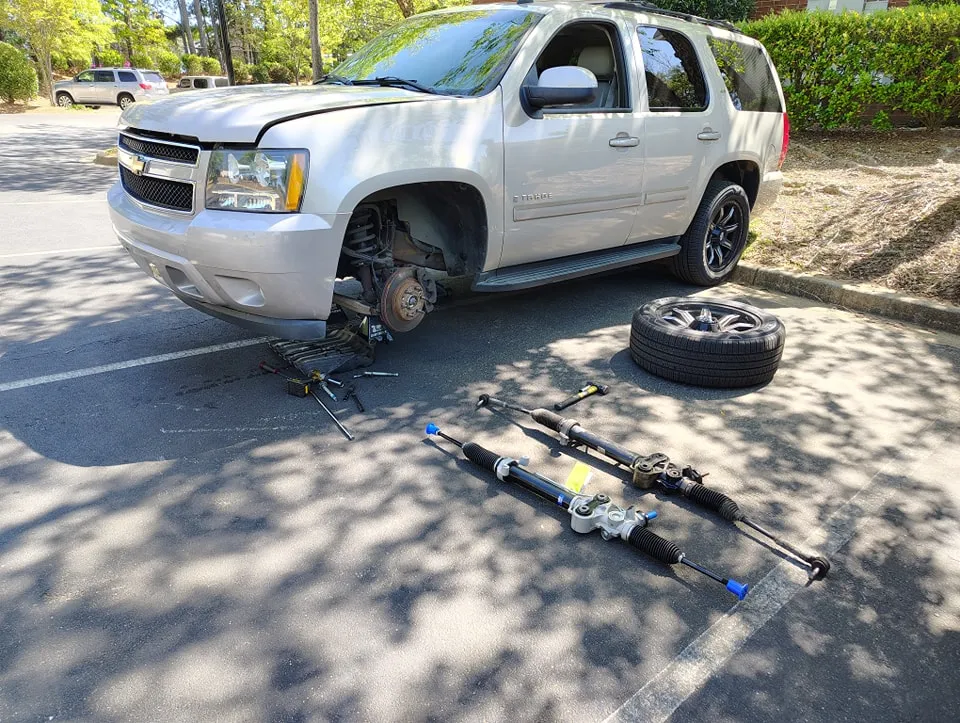
Common brake inspection and pad-and-rotor work may be possible on site, but the vehicle needs a firm, level surface with safe clearance and permission to perform the work. Traffic exposure, unstable ground, severe weather, seized components, hydraulic faults, alignment needs, or specialized equipment can make a shop or tow the safer plan.
Compare the proposed scope
Request a clear estimate describing parts, labor, and any condition that could change the scope. The FTC recommends understanding the condition to be repaired, the parts needed, and anticipated labor before work begins.