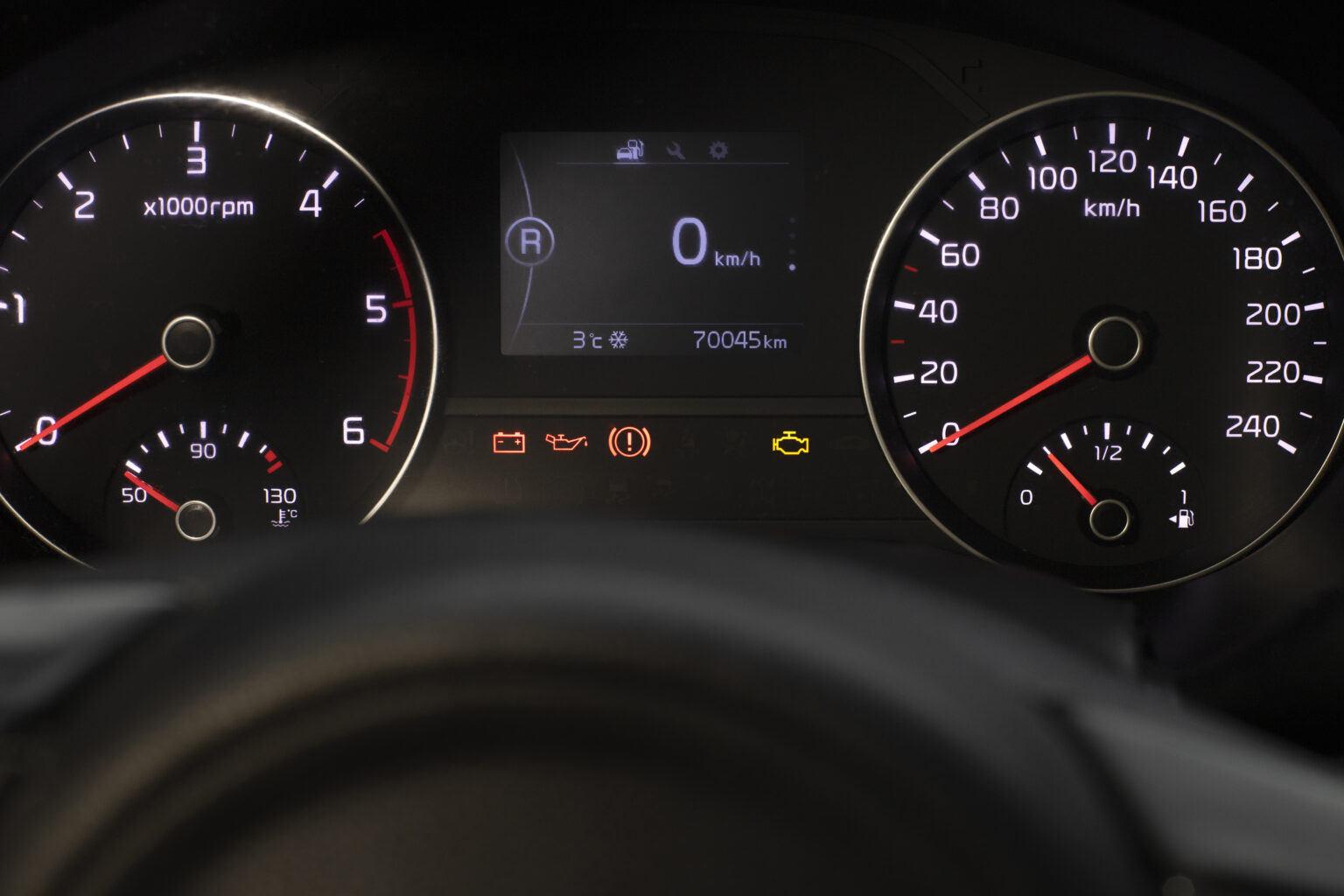
A check engine light tells you that the vehicle detected a condition; it does not identify a failed part by itself. A few observations made before the appointment can protect useful clues and make the first diagnostic visit more productive.
First, separate a steady light from a flashing light
A steady check engine light generally means the vehicle has stored a fault that needs diagnosis. A flashing light can indicate a severe misfire capable of damaging emissions components. Reduce speed, avoid heavy acceleration, and follow the vehicle manufacturer's instructions. If the vehicle shakes, loses power, overheats, produces smoke, or otherwise feels unsafe, stop driving in a safe place and arrange assistance.
Other red warnings—especially oil pressure, overheating, charging, or brake warnings—may require a different response. The symbol, color, message, and owner's-manual guidance matter.
Do not erase the evidence before the visit
Disconnecting the battery, clearing codes, or repeatedly restarting the vehicle can remove or change stored information. Unless the owner's manual or an immediate safety issue requires another action, leave the diagnostic memory intact. A code is only a starting point, but freeze-frame data, monitor status, and the order in which faults appeared can help narrow the test plan.
Record exactly when the light appeared
- Cold start, hot restart, idling, accelerating, cruising, braking, or refueling
- Approximate speed, engine temperature, fuel level, and weather
- Whether the light stayed on, flashed, or turned off after a restart
- Any rough running, hesitation, stalling, odor, noise, smoke, or fuel-use change
- Recent battery work, repairs, maintenance, fuel purchase, or long storage
A dashboard photo and a short video of the sound or gauge behavior can be useful when it is safe to capture them while parked. Never use a phone to document a symptom while driving.
Bring the vehicle identity and recent history
Share the year, make, model, engine when known, mileage, and VIN. Include recent invoices and the date of any battery replacement or related repair. The VIN also lets an owner check for open safety recalls through NHTSA before authorizing unrelated repair work.
Understand what a scan can and cannot prove
A scan tool can retrieve trouble codes and system data, but the code usually describes the system or condition that noticed a problem. Visual inspection, electrical measurements, leak checks, operating tests, service information, and vehicle-specific procedures may still be needed before replacing a component.
Helpful public references
- EPA: What to do with the Check Engine Light
- EPA: Frequently Asked Questions About On-Board Diagnostics
- FLHSMV vehicle safety resources